Disclosure: This Selligate review comes directly from the team that built the platform. You will get the honest story, including where it still falls short, not a polished sales page dressed up as an independent assessment.
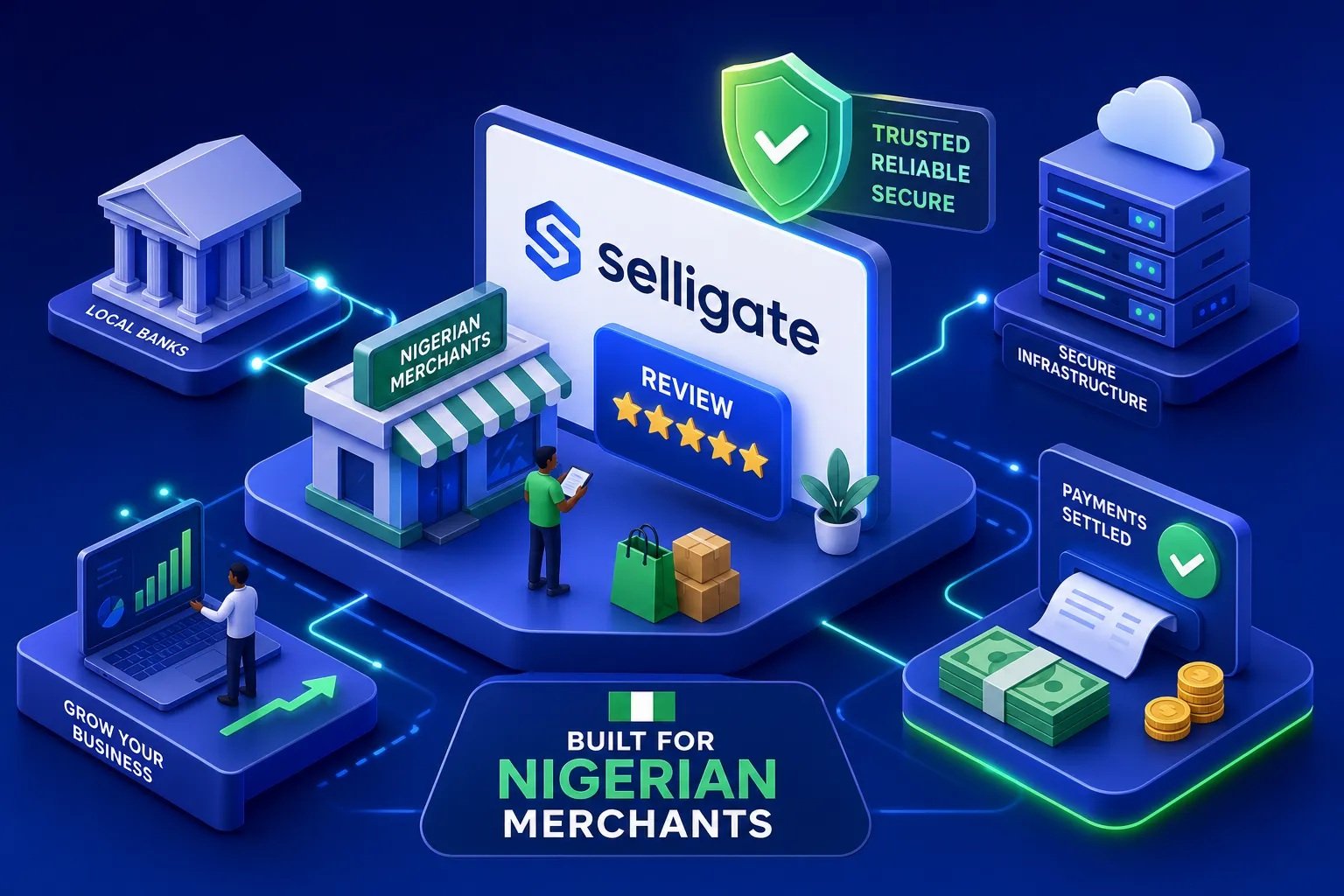
Selligate is a Nigerian e-commerce fulfilment platform that stores your products at 40-plus locations nationwide, dispatches orders the same day a customer buys, collects payment at the door, and credits your wallet automatically. If you are a Nigerian online seller losing money to COD rejections and slow remittances, that one sentence describes exactly why this platform exists. Read this review of Selligate in full before deciding whether it fits your operation.
Key takeaways
- Pre-positioned stock: Selligate stores your inventory near customers before any order exists, making same-day delivery in about three hours operationally possible in covered cities.
- Pay-per-success pricing: The standard delivery fee is ₦5,000 per successful delivery with no separate COD commission, and a 50% partial fee applies only when a customer rejects after the rider arrives.
- Automatic remittance: Wallet credit happens the moment delivery is confirmed, versus the industry norm of 7 to 15 working days with standard couriers.
- Rejection rates: Merchant case studies report rejection rates dropping from 40% to below 5%, though these are vendor-reported figures, not independently audited data.
- Best fit: Social commerce sellers, diaspora merchants, and Lagos-based stores expanding to other states will get the most value from this model.
Selligate review, key findings
The problem that forced its creation
Selligate was not built in a boardroom. The founder, Obanimoh Siyaka, ran Injina Store, an online retail business, and watched pay-on-delivery rejection rates climb past 40% while dispatch riders held cash for days. Every conventional logistics fix available in the Nigerian market at the time treated the parcel as the product. None of them treated the merchant’s cash flow as the real problem worth solving.
That frustration shaped the entire architecture of the platform. The goal was never faster parcel movement in isolation. It was eliminating the specific conditions that cause a Nigerian customer to open the door, look at a package, and send it back. At the same time, the merchant waits two weeks for a remittance on a product they already paid to ship.
Find out Selligate merchants’ reviews on Google here. Also check those on Trustpilot.
Why standard courier services were not enough
A regular courier collects a parcel from you, moves it across a city or state, and attempts delivery. If the customer refuses, you pay for the failed attempt and wait weeks for your product back. There is no pre-positioned inventory, no same-day capability built around local stock, and no automated payment remittance. Selligate was designed specifically to fill that gap for pay-on-delivery e-commerce, not for general parcel movement. The distinction matters more than most merchants realise until they have lost serious money to failed deliveries.
How does Selligate’s fulfilment model actually work?
Pre-positioned inventory: the core difference
Most fulfilment models ship from one central warehouse after an order comes in. Selligate’s model works differently: you send products in bulk to distribution points nearest your customers before any order exists. When a customer buys, a local agent is already holding your stock a few kilometres away. That logistical head start is why same-day delivery in as little as three hours is operationally possible in covered cities, rather than a marketing claim built on exceptional circumstances.
This pre-positioning approach also addresses the core psychology of COD rejection. The logic is straightforward: shorter, more predictable delivery windows give customers less time to change their minds, become unavailable, or refuse on impulse. Certainty builds trust, and trust closes the transaction.
From order assignment to wallet credit
The merchant assigns the order through the Selligate app, selecting the product and the relevant distribution location. A local fulfilment agent picks, packs, and dispatches. The customer pays at the door, by cash, card, or mobile transfer. That payment is automatically credited to the merchant’s in-app wallet once delivery is confirmed, and the merchant can request a bank withdrawal at any time.
Returns and undelivered items go through a managed reconciliation process rather than disappearing into a logistics black hole. Any merchant who has shipped through informal dispatch arrangements will recognise that problem immediately.
What does it actually cost to use Selligate?
Selligate review: pricing verdict
The standard delivery fee is ₦5,000 per successful delivery, covering fulfilment, dispatch, and POD collection with no separate commission charged on the cash collected. If a customer rejects the order without a valid reason after the rider arrives, a 50% partial fee of ₦2,500 applies. Selligate has also run a promotional rate of ₦2,000 per delivery for eligible new merchants in Lagos, Abuja, Port Harcourt, and Kaduna, though this should be confirmed on the dashboard before factoring it into your pricing decisions.
Storage, returns, and withdrawal fees
Warehousing is free while your products are actively selling. If a product records no completed sale for 90 consecutive days, a demurrage fee of ₦200 per day per product applies. Withdrawing funds from your wallet costs 1% of the withdrawal amount plus ₦100, capped at ₦2,000. Bulk stock movement into distribution points starts from ₦8,000, and optional services such as packaging, airport collection, and interstate movements are priced separately. Fee changes come with at least 30 days’ notice under the merchant terms, which is worth keeping in mind as the platform scales and revises its structure.
What do real merchant experiences reveal about Selligate?
What merchants consistently praise
Merchant case studies report rejection rates falling from 40% to below 5%, with one account showing a drop to 3% within the first 30 days of using the platform. Merchants expanding into 15 cities report zero losses from rejected deliveries after switching. The platform grew from roughly 10 merchants in 2024 to over 1,200 by 2025, which suggests the core model is delivering real value at a scale that goes beyond isolated success stories. Same-day delivery and instant wallet crediting have been the most consistently highlighted positives across published testimonials.
For context, the Nigerian logistics industry’s typical COD remittance cycle runs between 7 and 15 working days. A merchant processing 100 orders a month at ₦20,000 average order value is extending a substantial interest-free loan to their logistics provider every single month. Automatic wallet credit on delivery changes that equation entirely.
How does Selligate compare with other logistics options in Nigeria?
Side-by-side breakdown for pay-on-delivery sellers
The table below compares Selligate against three commonly used alternatives on the metrics that matter most for COD fulfilment. These comparisons are based on publicly available provider information; where independent data does not exist, that is noted directly.
| Provider | Delivery speed | POD success rate (documented) | Cost model |
|---|---|---|---|
| Selligate | Same day, approx. 3 hrs in covered cities with pre-positioned stock | 87.5–92.5% reduction in rejections (vendor-reported merchant case studies) | ₦5,000 per successful delivery; 50% fee for rejections; free active storage; no separate COD commission |
| Kwik | Fast within core urban centres; 2–5 days outside major cities | No comparable public figure | Per-delivery pricing; merchant bears failed-attempt and return costs |
| GIG Logistics | Broad national reach via transport hubs; speed depends on route | No comparable public figure | Route and parcel-dependent; better suited to standard shipping than COD fulfilment |
| Sendbox | Multi-carrier; speed varies by carrier and route selected | No comparable public figure | Multi-carrier rates; competitive for flexible shipping, not specialised for COD |
When a conventional courier might still make sense
If you are shipping high-value, low-volume B2B orders where COD rejection is not a concern, or if your customers are concentrated in one city and you already have a trusted dispatch arrangement, a standard courier may cost less per delivery. Selligate’s model earns its margin on COD-heavy, multi-city, volume-driven stores where the cost of failed deliveries is currently eating into already-thin profit margins.
The right comparison is never the headline delivery fee in isolation. It is the cost per completed, paid order, accounting for failed attempts, return charges, and remittance delays. Once you run those numbers honestly for your current setup, the picture usually becomes clearer faster than you expect.
Is Selligate the right fulfilment partner for your store?
The merchant profiles Selligate is built for
Selligate makes the most commercial sense for two distinct groups of sellers. The first group runs social commerce operations on Facebook and Instagram, needs same-day delivery and payment collection without managing their own riders, or operates internationally as a diaspora merchant who requires a competent on-ground fulfilment partner in Nigeria without being physically present.
The second group is store owners at a growth inflection point. Lagos-based sellers expanding into Abuja, Port Harcourt, Kano, or Ibadan without a trusted local presence in those cities fall squarely into this category, as do growing online stores that have outgrown informal dispatch arrangements and now need real tracking, remittance records, and structured return management to support continued scale.
Nigeria’s COD preference is not a temporary market quirk. The majority of Nigerian shoppers still choose pay-on-delivery over prepaid options, largely because consumer trust in online payments has not caught up with the growth in online shopping. Any fulfilment model that treats COD as an afterthought is working against the grain of how Nigerian customers actually buy.
What to verify before you commit
Before sending your first bulk shipment, confirm that Selligate has active distribution coverage in your specific target cities, not just the state capital. Ask for the current delivery rate, since promotional pricing is subject to change. Clarify the return timeline and liability terms for damaged or lost goods in writing, and request the escalation contact for disputed orders. Then run a small test batch across two or three locations before scaling. The platform has the infrastructure and the right model for Nigerian COD commerce; the practical due diligence is on you to confirm it covers your exact routes at the volume you need.
The bottom line on Selligate
The Selligate fulfillment model is genuinely different from what most Nigerian e-commerce sellers are used to. Pre-positioned stock, same-day delivery, automatic wallet crediting, and pay-per-success pricing address the exact problems that make COD logistics painful in Nigeria. The merchant results reported so far are strong, even accounting for the fact that they are self-reported rather than independently verified. The platform is still growing!
For any Nigerian online seller currently losing 20% or more of orders to rejections and waiting two weeks for remittances, the pricing model alone makes a structured test worth running. The worst outcome is a handful of fulfilled orders and clearer numbers to work with. The best outcome is a fulfilment setup that finally stops costing you money every time a customer changes their mind at the door.
This Selligate review should give you enough to make an informed call. If you want to confirm whether Selligate covers your specific cities and product category, contact the Selligate team directly. Bring your average monthly order volume, your current rejection rate, and the states you sell into. Those three numbers will tell you within a few minutes whether this model makes financial sense for your store.
Frequently Asked Questions
How quickly will I receive payment after a customer pays on delivery?
You receive payment immediately to my in-app wallet the moment delivery is confirmed. You can then request a bank withdrawal at any time, which short-circuits the industry norm of 7–15 working days for COD remittance.
What does it cost me to withdraw money from my Selligate wallet?
Withdrawing funds costs 1% of the withdrawal amount plus ₦100, capped at ₦2,000. You should factor that fee into your cash flow calculations when planning withdrawals.
Will I be charged for storing stock that doesn’t sell quickly?
Warehousing is free while your products are actively selling, but if an item records no completed sale for 90 consecutive days, a demurrage fee of ₦200 per day per product applies. Monitor slow-moving SKUs to avoid unexpected storage charges.
Are there promotional delivery rates I can access?
Yes, Selligate has run a promotional rate of ₦2,000 per delivery for eligible new merchants in Lagos, Abuja, Port Harcourt, and Kaduna. You must confirm the promotional rate on the dashboard before relying on it for pricing decisions, since it is subject to change or availability.
How do I verify Selligate actually covers the cities and routes I need before I send bulk stock?
You must confirm active distribution coverage in your target cities (not just the state capital) and request the current delivery rate, remittance timeline, liability terms, and an escalation contact in writing. Then run a small test batch across two or three locations to validate operational consistency before committing to larger shipments.