You know that uneasy feeling after a delivery agent calls to confirm your package has been collected by the customer. The order is done. The money is sitting somewhere. But where it actually is, when it will move, and who is holding it at this exact moment is anyone’s guess. If you have sold physical products online in Nigeria for any length of time, that feeling is familiar. Some couriers settle weekly. Others take fourteen days. A few take longer, and the only way to find out is to call someone who probably does not pick up.
So, how does Selligate pay merchants after delivery? The short answer is: automatically, per delivery, and on demand, with no batch runs, no scheduled payout days, and no opaque holding periods. Selligate was built by people who lived through exactly that experience, and the way Selligate handles remittance reflects it. This article walks through the complete settlement flow: from the moment a delivery agent collects cash at a customer’s door to the moment the funds land in your bank account. You will also see the fees involved, what happens when an order is rejected, and how to keep your cash moving without unnecessary delays.
How Selligate pays merchants after delivery in Nigeria, the full journey at a glance
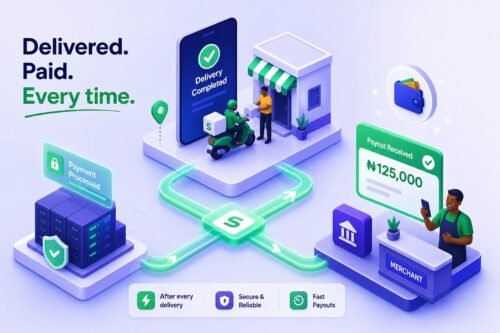
Before going into detail, it helps to hold the full picture in your head. The Selligate payout process moves through five stages:
- Cash collected. The delivery agent collects cash from the customer at the point of delivery.
- Remittance obligation. The agent remits the collected funds to Selligate’s designated account within 1 to 12 hours of order delivery.
- Wallet credited. The merchant wallet is credited once the payment is received from the agent within 1 to 12 hours of order delivery.
- Withdrawal initiated. The merchant initiates a funds withdrawal at any time from the Selligate dashboard.
- Bank credited. The funds arrive in the merchant’s bank account automatically.
Understanding the full chain matters because it tells you exactly where to look when something feels slow. If your wallet has not updated, the question to ask is whether the delivery has been confirmed on the system, not whether Selligate’s finance team is processing a batch. If your bank alert has not arrived after withdrawal, the issue is on the transfer side, not the wallet side. Knowing where you are in the chain removes the guesswork entirely.
For merchants running Facebook or Instagram ad campaigns, this matters beyond convenience. Social commerce in Nigeria runs on fast reinvestment cycles. You spend on ads, orders come in, and you need those funds back quickly to restock, scale your budget, or cover the next supplier payment. A system that batches settlements weekly breaks that cycle. Selligate’s pay-on-delivery settlement model is designed around the cash-flow rhythm of sellers who are actively spending to grow, not waiting passively for a remittance that arrives on someone else’s schedule.
What happens before your wallet sees a single naira
The part of the Selligate payout schedule that most merchants never think about is what happens between the customer handing over cash and the wallet credit appearing. Selligate’s delivery agents, referred to as distributors, are contractually required to remit all cash collected from customers to Selligate’s designated account within 12 hours of a successful delivery. Any amount not remitted within that window attracts a 20% daily interest penalty on the outstanding sum. This isn’t meant to alarm you; it’s to show that every delivery has a formal accountability structure behind it, not a loose arrangement that depends on a rider’s goodwill.
You might be wondering why Selligate needs to wait for an agent remittance before crediting a merchant wallet. This is because of accountability. At Selligate’s end, a delivery is considered confirmed and completed when Selligate actually receives payment for the delivery. Selligate cannot credit the wallet based on verbal confirmation before receiving payment, to avoid errors and the need for reversal.
When and how your merchant wallet gets credited
Once a delivery is confirmed, Selligate credits your merchant wallet automatically. You do not need to raise a ticket, send a message, or wait for a scheduled run. The wallet updates in real time, meaning you can open the Selligate app at any point and see exactly which orders have settled, which are still in transit, and which are pending.
The app gives you a clear breakdown of your order activity, including:
- Delivered orders
- Pending orders
- Cancelled orders
- Your current wallet balance
- A full transaction history
- Inventory stock balances
This level of visibility is something many Nigerian courier services do not offer. Sellers working with standard courier arrangements typically have no dashboard, no real-time status, and no straightforward way to reconcile deliveries against payments. With Selligate, you can match every wallet credit to a specific delivered order at any time, which makes end-of-day or end-of-week accounting straightforward rather than a manual reconciliation exercise.
Withdrawing your funds to a Nigerian bank account
Withdrawals are initiated directly from the Selligate app, from the wallet section. You enter the amount you want to withdraw, confirm your registered bank account details, and submit. There is no scheduled payout day and no requirement to contact a finance team. The app handles the entire process. Check the app or current terms for any minimum withdrawal thresholds, as these can be updated from time to time. At the time of writing, there is no minimum withdrawal amount.
On timing, Selligate states that bank account crediting happens instantly or within the same evening. Timing depends on when the withdrawal is initiated. This aligns with how Nigerian fintech payment rails generally behave in 2026: most wallet-to-bank transfers on the NIP real-time payment infrastructure settle within seconds to a few minutes, though rare edge cases, such as those requiring manual review, can stretch to same day.
The fee structure is transparent and straightforward. Selligate charges a withdrawal fee of 1% of the withdrawal amount plus a flat ₦100 charge, with the total fee capped at ₦2,000 per transaction. As a practical illustration: withdrawing ₦50,000 costs ₦500 plus ₦100, totaling ₦600. Withdrawing ₦500,000 costs the capped ₦2,000. Even if you are withdrawing ₦4,000,000 or more, for example, the charge is still ₦2,000. There is no separate remittance fee for receiving delivered-order payments into your wallet; the only charge on the settlement side is the withdrawal fee when you move funds to your bank account.
Two other operational charges affect the net amount in your wallet over time. The minimum delivery cost per order defaults to ₦5,000 depending on the delivery location.
Cancelled orders, returns, and what they mean for your money
When a customer refuses to accept a delivery, no payment is collected, no wallet credit is triggered, and the order is marked as failed in the app. You see this in real time, not at the end of a settlement period. Selligate handles the physical return of the product back to its custody, which means your financial exposure in a rejection scenario is the delivery cost rather than the product value. The goods come back; only the N4,000 flat-rate logistics spend is lost.
Reducing the frequency of rejections is where Selligate’s AI risk-scoring system does the most work for merchants. The system analyses customer behavior patterns, including delivery refusals, missed appointments, and call pickup rates, flagging customers who show three or more default behaviors as high-risk before dispatch. This lets merchants and Selligate deprioritize or verify certain orders before they enter the delivery cycle, directly reducing the number of failed deliveries that eat into your margin.
Why Selligate’s payout model is faster than what most Nigerian sellers are used to
To understand what Selligate’s settlement model actually means in practice, it helps to place it against the standard Nigerian courier experience. The typical COD remittance cycle for logistics and courier companies in Nigeria runs between seven and fifteen working days after delivery. Some providers offer accelerated options at two to three working days, usually for a fee or under special terms. Weekly remittance is considered reasonably fast in the current market. During that entire window, the merchant’s working capital is effectively frozen: it is not sitting in any visible account, and it is not in the merchant’s account either. There is no dashboard to check and no clear escalation path if the remittance slips further.
For a seller spending on paid ads, that delay is a structural constraint, not merely an inconvenience. Every day that settlement is delayed is a day you cannot reinvest in inventory, ad spend, or fulfilment capacity, and for sellers working on tight margins, the compounding cost of even one week’s frozen capital on a ₦200,000 ad spend is real and quantifiable.
Selligate’s approach treats payment remittance as part of the infrastructure, not as a back-office function that runs on its own timetable. Automatic wallet crediting after each confirmed delivery, combined with on-demand withdrawal to a registered bank account, means the merchant controls the cash flow rather than waiting on someone else’s cycle. That shift, from a merchant who is waiting to a merchant who is withdrawing, is the practical difference between a business that can move quickly and one that cannot.
Managing your Selligate settlement flow with confidence
Once a delivery is confirmed, your wallet is credited automatically and you can withdraw to your bank account on demand, the entire chain works without manual input. Everything sitting behind that sequence, agent remittance obligations, delivery verification, and risk scoring, exists to make it reliable and repeatable. The Selligate app is the single place where you can see every order’s status, every wallet credit, and every withdrawal record, all in one view.
If you are currently working with a courier that gives you no visibility into your money after delivery, you already know the cost of that uncertainty. It shows up in cash flow gaps and delayed restocking, and it adds the mental load of chasing payments that should already be with you. Selligate was built by e-commerce sellers who experienced that exact problem at Injina Store, their own online retail operation, and the remittance process reflects those hard lessons directly.
If you want to know exactly how Selligate pays merchants after delivery in Nigeria, and experience the difference for yourself, register as a Selligate merchant or reach out to the Selligate team to start the onboarding process today.