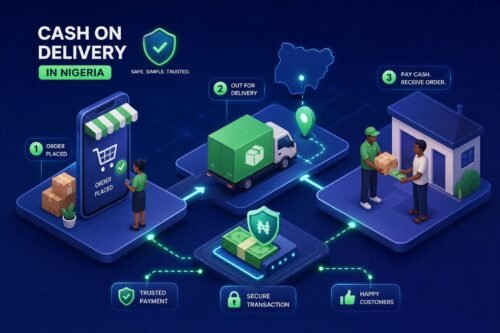
Picture a first-time online buyer in Lagos. She has finally found the hair she wants, added it to her cart, but the moment checkout asks for her card details, she stops. She’ll buy it gladly, but she won’t pay upfront. Tell the rider to bring it, and she’ll sort him out at the door.
That hesitation is not unique to her. So what is cash on delivery, and how does it work in Nigeria? Cash on delivery (COD), also known as pay on delivery, is the arrangement where a customer pays for goods at the point of receipt rather than at checkout. In Nigeria, COD is not a fallback option sellers reluctantly offer; it is the expectation many buyers arrive with, and it influences a wide range of e-commerce decisions a seller makes.
Some sellers still manage this with informal dispatch riders and a lot of goodwill. Others have moved to tech-enabled platforms like Selligate E-commerce Fulfillments that handle the full COD cycle, from warehousing through to cash remittance, on their behalf. This article walks through exactly how cash on delivery works in Nigeria, why it remains dominant, and what sellers need to know to run it profitably.
What is cash on delivery and how does it work in Nigeria?
Before going into the mechanics, it helps to understand both the terminology and exactly what happens at the point of collection, because the details matter more than most sellers realise.
Pay on delivery, collect on delivery: what’s the difference?
COD, pay on delivery, and collect on delivery are used interchangeably across Nigeria, and they all describe the same arrangement: the customer pays at the point of receipt, not at the time of placing the order. If you’ve seen a seller’s page say “we offer POD,” or heard a buyer ask “do you deliver first before payment?”, they’re referring to the same model.
The distinction is mostly professional context. “Collect on delivery” tends to be the language used by logistics companies and warehouse operators. “Pay on delivery” is what buyers and sellers say in everyday trade. For practical purposes, both terms point to one arrangement: no money changes hands until the product arrives.
How COD collection works in Nigeria
When a rider arrives at a customer’s address, payment is collected in one of three ways: cash, which industry practice widely identifies as the dominant method; POS or debit card, for logistics providers that equip their agents with terminals; or bank transfer via USSD or mobile banking, where both seller and courier accept it.
The method available depends entirely on the logistics partner. Not every rider carries a POS terminal, and bank transfers at delivery are harder to verify instantly, which makes some sellers reluctant to accept them. Before committing to a COD provider, confirm exactly which payment options their agents support at the doorstep. This single detail can affect your customer experience and your rejection rate.
Why COD is still the default choice for Nigerian shoppers
The trust gap that keeps COD alive
The reason COD has held on so firmly in Nigeria has little to do with a shortage of fintech adoption. Nigerians have mobile banking apps, debit cards, and payment wallets. The issue is trust, specifically the lack of it between buyers and unfamiliar online sellers. Many Nigerian consumers have been burned by online shopping scams, received counterfeit goods, or placed orders that never arrived. When that’s the backdrop, handing over money before seeing the product feels like an unnecessary gamble.
This behavioural pattern shows up even among tech-savvy shoppers. A buyer can have a fully funded account and reliable internet access, and still insist on pay on delivery. It is a rational response to a market where fraud has been common and refund processes are rarely straightforward. The preference for COD is a trust decision, not a technology gap.
What the data says about COD’s share of Nigerian e-commerce
Industry estimates place cash-based payment methods at approximately 23% of Nigerian online sales, a figure that reflects real progress in digital payments, though definitions vary across studies. Separate dashboard estimates for 2024 place COD closer to 45% of transactions when a broader definition of pay-on-delivery is applied across seller types and platforms. The spread reflects different methodologies and scopes rather than outright contradiction.
For social commerce sellers on Facebook and Instagram, the COD rate is almost certainly higher than the national average. When buyers are purchasing from an unfamiliar page with no verified reviews or brand history, paying upfront is a significant ask. Pay on delivery is frequently a deciding factor, and in some segments the primary driver, of social-commerce purchases, which is why logistics infrastructure matters so much for social commerce merchants.
How a COD order moves from checkout to cash in your account
From order placement to doorstep delivery
The process starts when a buyer selects COD at checkout, or confirms it through a conversation on WhatsApp, Instagram, or Facebook. The seller confirms the order, packs the item, labels it clearly with an order reference, and arranges for a logistics partner to collect it. The rider picks up the parcel and delivers it to the buyer’s address, at which point payment is collected in cash or via POS.
One detail sellers frequently overlook is inspection policy. Some logistics providers allow buyers to inspect an item before paying; others require payment on receipt before opening. This policy difference is likely to affect return rates and buyer disputes. Sellers should clarify this with their logistics partner before going live and communicate the policy to buyers clearly at the point of sale.
How COD remittance works, and where delays happen
After the rider collects payment, the logistics provider aggregates the cash from all completed deliveries, deducts delivery and handling fees (referred to as COD fees), and remits the balance to the merchant. This remittance stage is where many sellers encounter their most persistent frustrations.
Remittance timing varies significantly across providers. Some operate on a daily settlement cycle; others remit weekly or biweekly, a difference that becomes significant at scale. Delayed remittance is one of the most cited cash flow problems among Nigerian e-commerce sellers, particularly those running high volumes on thin margins. Failed deliveries and order refusals are returned to sender and treated as return items. Each one still incurs a logistics cost, with no corresponding revenue to offset it.
The risks that come with COD and what they actually cost sellers
Order rejections and failed deliveries
Failed deliveries are the most financially damaging part of running COD logistics in Nigeria. A buyer places an order with no real intention to purchase, supplies a wrong address, or simply refuses the parcel at the door. In each case, the seller loses the logistics fee. The product returns unsold, and the cost of moving it is already gone.
The scale of these losses is significant. Nigerian merchants can lose between ₦50,000 and ₦500,000 per month to COD failures, depending on order volume and product category. Based on figures from multiple industry sources, the average rejection rate for small and medium-sized Nigerian sellers is estimated at around 20% to 25%, with fashion and lifestyle categories sometimes pushing past 30%, though rates vary by city and fulfilment arrangement. On thin margins, that rate alone determines whether a business is profitable.
The fraud patterns that eat into merchant profits
Order fraud in Nigerian COD logistics follows recognisable patterns. Fake addresses make delivery impossible; riders spend time and fuel to reach a location that doesn’t exist. Unreachable phone numbers produce the same outcome. Customer refusal after the rider has made the journey is another common pattern, often accompanied by excuses like “I changed my mind” or “I didn’t order this.”
The more serious patterns involve agent-customer collusion, where a rider and buyer agree to keep the cash and report an order as returned, and payment short-changing, where the customer pays less than the invoice amount and claims lack of exact change. Most of these are preventable, but only if sellers build proper screening into their process before orders leave their hands.
How to set up COD fulfilment without losing money on rejections
Screening orders before they leave your hands
The most effective thing a seller can do to reduce COD losses costs almost nothing: verify the order before packing it. A phone call to confirm the order, validate the delivery address, and gauge buyer intent filters out a meaningful percentage of fake or low-intent orders before they become logistics expenses. Buyers who don’t answer a pre-dispatch confirmation call are a red flag worth acting on.
High-risk orders deserve extra scrutiny. First-time buyers in unfamiliar locations, unusually large orders, and buyers who avoid verification calls should all be flagged before dispatch. Attaching a clear invoice to every parcel, with the order reference, item description, and declared value, also helps logistics agents reconcile cash against deliveries accurately and reduces the likelihood of short-changing.
What separates a COD fulfilment partner from a regular courier
A regular courier moves a parcel from point A to point B and collects cash. That’s where the service ends. A COD fulfilment partner does considerably more: it stores your inventory close to your buyers, delivers the same day an order is assigned, handles returns on your behalf, and remits payment through a tracked system that ties every transaction to a specific order.
Sellers relying on basic couriers often have no real visibility into which orders were delivered, which were refused, and which cash hasn’t been accounted for. Reconciling this manually is slow, error-prone, and unsustainable as order volumes grow. A proper fulfilment partner solves this at the infrastructure level, not through spreadsheets and phone calls.
Why same-day delivery and instant remittance change the maths
The faster a delivery happens, the less time a buyer has to change their mind. Buyer regret is a genuine driver of COD rejections: when two or three days pass between ordering and delivery, enthusiasm fades, circumstances shift, and refusal rates climb. Same-day delivery cuts that window significantly, and with it, the rejection rate.
This is the logic behind how Selligate E-commerce Fulfillments structures its service. With pre-positioned stock across 40-plus distribution points in Nigeria, Selligate dispatches from the moment an order is assigned through its app. Once the customer pays at the door, the merchant’s wallet is credited automatically, no chasing up riders, no waiting on a weekly remittance cycle. For sellers dealing with unpredictable cash flow and high rejection rates, that model changes the numbers considerably. If you’d like to understand how it works for your product type, reach out to the Selligate team directly.
Building a COD operation that actually works
Cash on delivery is not disappearing from Nigerian e-commerce any time soon. Consumer confidence in prepaid payments is growing, but slowly, and the sellers who wait for that shift rather than building proper COD infrastructure will find themselves behind. The sellers who learn to manage COD well now will run more profitable operations. They will also scale faster than those still relying on informal dispatch arrangements, particularly those who focus on reducing rejections through order screening and tight reconciliation, and who invest in choosing the right fulfilment partner.
The risks associated with COD, including rejections, fraud, and delayed remittance, are real but manageable. They respond to the right systems and the right partners. A merchant who has addressed all three is not simply surviving COD Nigeria’s challenges; they are using it as a competitive advantage in a market where most buyers still demand it as a condition of purchase.
If you’re still asking what is cash on delivery and how does it work in Nigeria, the answer is clearer than it first appears: it is a structured, manageable process, and with the right infrastructure behind it, a profitable one. To see what a fully managed COD fulfilment setup looks like in practice, contact the Selligate E-commerce Fulfillments team and find out whether the platform fits your current operation.