You confirm an order. You dispatch the product. The customer changes their mind, refuses the door, or simply is not at home. The courier charges you anyway. The product comes back. You repeat the cycle with the next order.
This is what COD rejection does to an online business in Nigeria. For merchants running Facebook and Instagram ads, rejection rates between 20% and 40% are not unusual. At that level, a winning ad campaign and a quality product are not enough. The unit economics simply do not work.
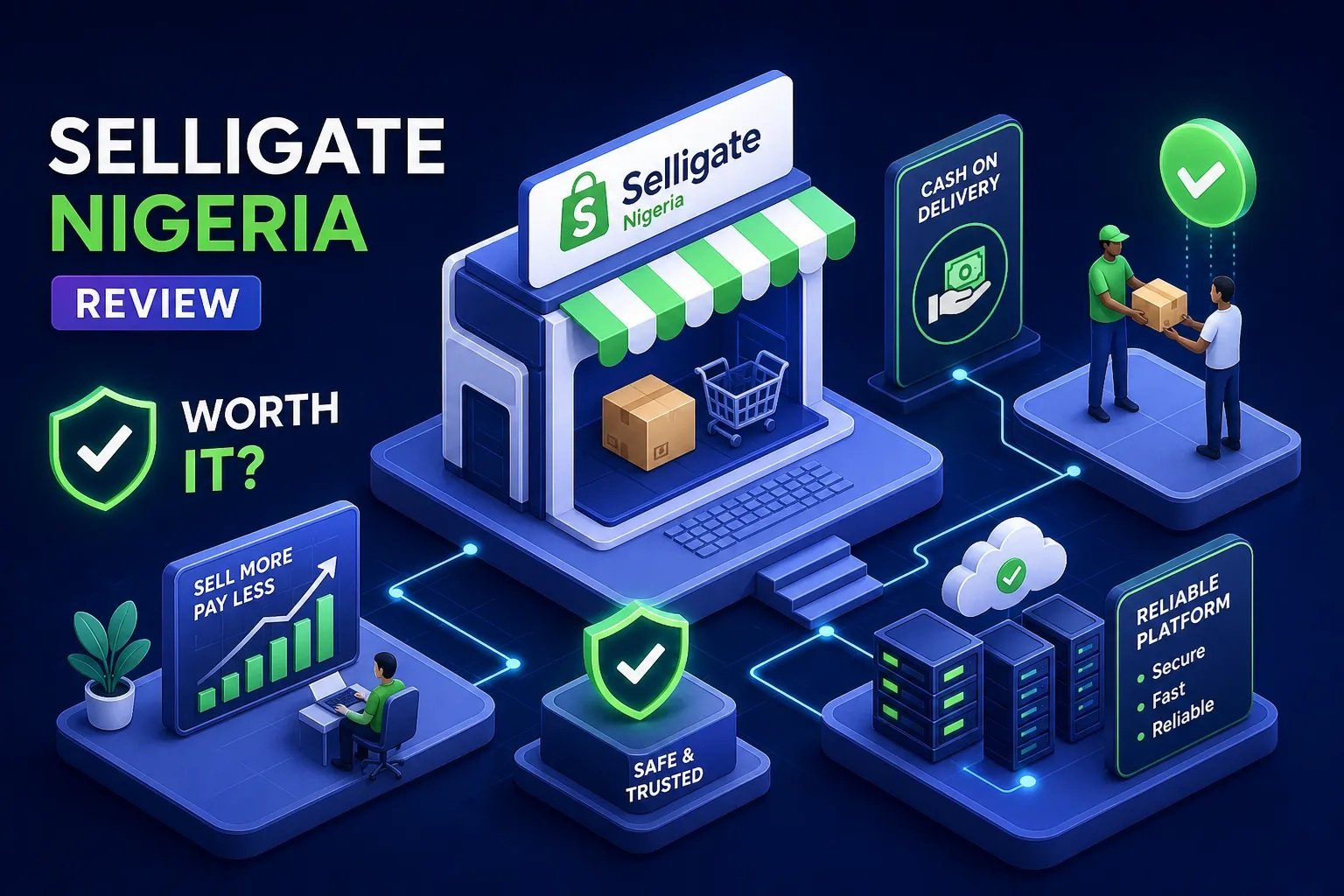
Selligate E-commerce Fulfilments was created specifically to end that cycle. As a COD fulfilment platform, the Selligate ecommerce platform Nigeria merchants are increasingly adopting aims to fix high rejection rates by pre-positioning inventory closer to customers and crediting remittances the moment an order is delivered. This review walks through what the platform is, how it works from your first registration to your first withdrawal, what you will pay, where it delivers, and the honest answer to whether it suits your type of store.
What Selligate is and why it exists
The COD rejection problem that broke the business model
When you are a social commerce seller, rejection hits differently. You have already spent on the ad. You fulfilled the order. The courier attempted delivery. And now you owe the logistics company a fee for a product sitting in your store again. A 40% rejection rate at 100 orders per month means 40 failed transactions, 40 delivery fees charged, and zero revenue from those attempts. It is loss-making at almost any product margin.
This is not an edge case in Nigeria. It is a common experience among many sellers using informal logistics for pay-on-delivery orders, small and medium-scale online businesses that rely on informal dispatch riders or generic courier services. The courier’s job is to move the parcel. What happens after the door opens is not their problem.
Built by a seller, not a logistics company
Selligate was built with a merchant’s perspective at its core, reportedly by someone who absorbed those exact losses running an online store before developing a solution. That origin matters. The platform was designed around what merchants actually need: fast remittance, visibility into rejections, and pre-positioned inventory that reaches customers before purchase intent fades.
A courier moves parcels. Selligate stores your inventory, dispatches orders, collects payment, handles returns, and credits your account, all through one proprietary application. That distinction is fundamental to understanding what you are actually paying for.
How the Selligate ecommerce platform Nigeria works end-to-end
Getting started: registration and product setup
Merchants register on the Selligate app, add their product catalogue, and select which of Selligate’s warehouse locations they want to stock. Once onboarded, merchants ship their products in bulk to their selected warehouse locations. Warehousing is currently free, subject to terms and conditions, which makes the entry point genuinely low-risk for new users.
From order to doorstep: assignment and same-day delivery
When an order comes in, whether from a Facebook lead form, an Instagram DM, or your own online store, the merchant assigns it through the Selligate app. The nearest stocked warehouse picks and dispatches the order for same-day delivery, with a stated target of within three hours. The real-time tracking dashboard shows each order’s status as delivery in progress, delivered, pending, or canceled. The platform’s centralized assignment system reduces the need for WhatsApp chases or calls to a dispatch rider.
Payment collection and instant remittance
Once the customer receives the order and pays, the merchant’s Selligate wallet is credited automatically. There is no end-of-week remittance batch or “we will pay you on Friday” arrangement. Funds can be withdrawn to a bank account at any time, with instant bank crediting.
This automatic crediting is the feature that separates Selligate most sharply from informal COD arrangements, where cash collection is unreliable and remittance timing depends entirely on how trustworthy your dispatch rider is feeling that week.
Selligate ecommerce platform Nigeria: delivery coverage and performance
The 35-city fulfilment network
Selligate covers 35 cities and towns across Nigeria, including Lagos, Abuja, Port Harcourt, Kano, Ibadan, Enugu, Warri, Uyo, Calabar, Owerri, Benin City, Ilorin, Jos, Onitsha, Aba, Asaba, Kaduna, Sokoto, Abeokuta, and Bauchi, among others. According to company materials, physical warehouse offices operate in four cities: Lagos, Abuja, Port Harcourt, and Kaduna. Fulfilment agents service the remaining covered cities.
Same-day delivery applies within the named city. For surrounding towns in the same state, for example, other areas in Anambra beyond Onitsha, Selligate uses waybill dispatch instead. Know this distinction before assigning orders to state-adjacent locations, particularly if a significant portion of your customer base sits outside the main city centre.
Delivery time and rejection rate performance
Selligate’s published delivery target is same-day, within three hours of order assignment in covered cities. According to merchant testimonials cited in Selligate’s case materials, delivery timelines have dropped from three to four days down to the same day after switching from traditional courier arrangements. On rejection rates, Selligate cites a reduction from 40% to under 5%, and in specific merchant cases, down to 3% within 30 days of switching to the platform.
These are platform claims rather than independently audited figures. The mechanism is plausible, though: pre-positioned inventory means the product arrives while the customer’s purchase intent is still active. A same-day delivery leaves far less room for buyer’s remorse than a four-day wait.
Selligate ecommerce platform Nigeria: pricing, fees, and how merchants get paid
Delivery fees and additional costs
Selligate charges a minimum delivery fee of ₦5,000 and a maximum of ₦7,000 (but ₦6,000 for Premium Refund), depending on distance. If a location would cost more, you will be informed in advance. Premium Refund is an automated monthly refund deposited into a merchant’s wallet at the end of the month for completing 100 or more deliveries. This can also be referred to as a volume discount. Selligate warehousing is free for 90 days.
Optional services such as packaging, airport or seaport pickup, and interstate stock movements are available but priced separately upon agreement.
Who Selligate actually works best for
Social commerce and Facebook ads sellers
If you are running paid ads on Facebook or Instagram and receiving orders through DMs or lead forms, this order fulfilment platform was designed almost exactly for you.
Same-day delivery and reliable cash collection on delivery are the two things informal dispatch riders consistently fail to provide at scale. The same-day model also protects your ad-to-delivery window. A customer who ordered on impulse after seeing your ad is far less likely to reject a delivery that arrives the same day than one that shows up four days later, when they have moved on, found a cheaper option, or simply forgotten why they ordered.
Merchants expanding beyond their home city
Lagos-based sellers who want to fulfil orders in Abuja, Port Harcourt, or Kano without opening offices or hiring local staff will find Selligate’s pre-positioned warehouse network genuinely useful. The platform removes the logistics complexity of interstate fulfilment without requiring you to physically be in those cities.
This also applies to diaspora merchants and internationally based sellers who want to reach Nigerian customers but cannot manage local warehousing, cash collection, or delivery from outside the country. Selligate operates as an on-ground fulfilment partner you can manage entirely through an app, regardless of where you are based.
Honest verdict: is Selligate the right fit for your store?
Where Selligate genuinely stands out
Three capabilities are difficult to replicate with informal logistics: pre-positioned inventory across 35 cities, automatic wallet crediting the moment an order is delivered, and a real-time order dashboard that replaces the guesswork entirely. Selligate packages all three into one platform. For a COD-dependent business, that combination is significant.
The rejection rate reduction from 40% to under 5%, if sustained across your product category and covered cities, has a direct and calculable impact on profitability. That alone justifies testing the platform.
Limitations to know before you start
Selligate’s same-day delivery is city-specific. If a meaningful share of your orders falls in far villages or rural areas, the network will not fully resolve your last-mile problem. There are gaps, and it is better to know them before you commit your inventory.
As of the time of writing this review, there is no publicly documented Shopify app or WooCommerce plugin. Merchants running independent e-commerce stores should confirm API availability directly with Selligate before assuming seamless order syncing. This is a genuine gap worth clarifying upfront, particularly for sellers managing high order volumes through a storefront.
The bottom line
For Nigerian online sellers running COD operations, particularly on social media, the Selligate ecommerce platform Nigeria offers one of the most purpose-built solutions available for order fulfilment and cash-on-delivery logistics. The free starter plan makes it low-risk to test without restructuring your entire logistics setup. The coverage, the remittance model, and the rejection rate performance directly address the problems that erode COD profitability at the root.
The question is not whether Selligate is worth trying. It is how much longer you plan to absorb rejection losses before you do.